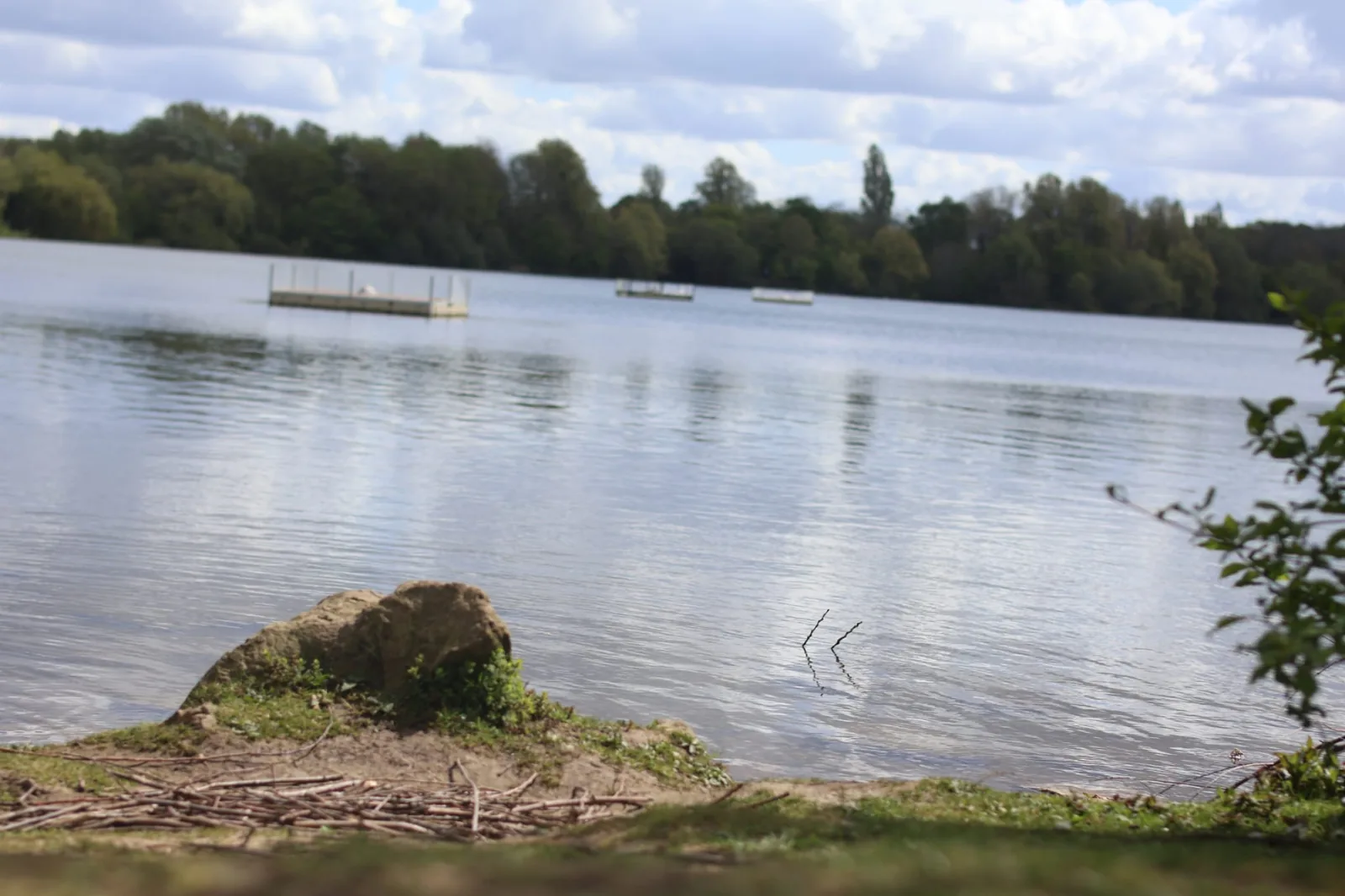
Sink a few bundles of brushwood in the deep water of a coarse fishery and you can cut cormorant visits by three quarters. That isn't a line from a pressure group. It came out of paired-pond trials near Reading, where one pond got an artificial fish refuge and an identical pond next to it got nothing. The refuge pond saw 77% fewer cormorant visits and lost nearly four fifths less fish by weight. Same water, same stocking, same birds overhead. The only difference was somewhere for the fish to hide.
So there's a serious argument, and it deserves to be taken seriously: if habitat does that, why are we still talking about shooting birds? Why reach for a licence to kill a protected species when a few tonnes of brushwood and pipe will do the job without anyone firing a shot?
The people who make this case aren't cranks. They have evidence, and some of it is good.
The only difference was somewhere for the fish to hide.
The case for habitat
The Reading trials weren't a one-off. A later experiment ran the same idea across 24 ponds with different fish communities, and it held up. Refuges protected fish even where there was already natural weed for cover. In the ponds that worked best, the weight of young roach and rudd was hundreds of times higher where refuges were present than where they weren't. Give a small fish a structure it can dart into and the bird above it burns more energy for less return. Eventually the bird goes elsewhere.
The logic is sound and it's cheap. You aren't fighting the cormorant, you're changing the maths of the hunt. A pond with good refuge, deep water and structure is a worse day's fishing for a bird than the next pond along. None of it needs a licence, a firearm, or a row with a conservation body.
Even the Environment Agency treats predation management as part of the job. In a single recent year it logged nearly a thousand requests for advice on managing predation. So this isn't a fringe position dismissed by the authorities. It's something the people who run our fisheries already accept as part of normal management.
If you stopped reading here, you'd conclude that the habitat camp has won the argument. The trouble starts when you ask where, and on which fish.
You aren't fighting the cormorant, you're changing the maths of the hunt.

Where it stops working
The refuge results are real, but they come with conditions the headline numbers tend to drop.
The first is that the effect is picky. In that 24-pond study, roach and rudd did well. Other species showed no benefit at all. A refuge only protects a fish that will use it, and not every fish holds in cover. So "refuges protect fish" is really "refuges protect the fish that hide in refuges," which is a much smaller claim.
The second condition is the bigger one. Every strong result comes from ponds and small still waters. That's not an accident. The whole method depends on fish choosing to occupy a fixed structure in a contained body of water. Take it to a river and it falls apart, because the fish under most pressure there aren't sitting still.
A migrating salmon smolt can't hide in a brush pile. Neither can a sea trout or a grayling moving through a system. These are the fish where cormorant predation does its worst damage, and they are exactly the fish that habitat refuge does nothing for. In Danish rivers, where cormorant numbers have risen sharply, the result has been a measurable collapse in salmon, trout and other river fish. Across Europe, predation is now named as a threat to salmon, trout, grayling and other migratory species. You cannot refuge your way out of that. There's no structure you can sink that protects a fish travelling fifty miles to the sea.
Now look at who runs those rivers. River fishing sits at the cheap end of the sport. A club with miles of a good river will often charge thirty pounds a year, sometimes less, run entirely by a committee of unpaid members with no staff, no plant and no budget beyond what the subscriptions bring in. That isn't a complaint, it's how river angling has always worked, and it's part of what makes it the people's end of the sport. But it leaves those clubs with the least money and the fewest tools facing the waters where predation hits hardest.
And even if habitat work could help on a river, which for migratory fish it largely can't, a club couldn't simply go and do it. Work in or near a main river is regulated. Anything within eight metres of the bank, putting logs or stones in to improve habitat, cleaning gravel for spawning, easing a fish past a weir, can need a flood risk activity permit from the Environment Agency. For most river work that's a bespoke permit, and the Agency's own guidance puts one at around a thousand pounds plus the time to apply, assess and survey. The specialist river work that does happen, fish passes and the like, is mostly done by rivers trusts and contractors, not by the club. So the river club faces a thousand-pound permit before it can legally drop a log in the water, on fish a refuge wouldn't save anyway, funded from memberships that cost thirty pounds a head. The maths doesn't work, and it was never going to.
You cannot refuge your way out of that.
The mitigation camp often leans on a 2021 meta-analysis, a study that pools the results of many earlier ones, that found the overall effect of cormorant predation on fish populations was negative but not statistically significant. That sounds like a knockout for the "cormorants don't really matter" argument, and it gets quoted that way. It shouldn't be. The same researchers were clear that an average across wildly different situations is not a finding of no effect. It's a finding that the effect depends entirely on where you look. On a stocked still water full of coarse fish, habitat helps and predation may be manageable. On a river full of migrating salmon and trout, the picture is the opposite. Reading "not significant on average" as "no problem anywhere" is the kind of mistake that loses fish.
So habitat works on the waters where it works. It does nothing on the waters where the threat is sharpest. Any honest reading of the evidence lands there, and it points to the same conclusion from both directions: you need habitat and you need control. They aren't rivals. They cover different ground.
Which raises a question nobody seems keen to ask. If habitat works, who's paying for it? That's a separate argument, and we've made it in full in the companion piece, A capital idea?
Both tools are necessary. Habitat works on the waters where fish will use it, and control is the only tool on the waters where they won't. Neither is a cheaper version of the other, and control is not what you reach for when the habitat budget runs out. They do different jobs on different waters, and a fishery facing predation needs the right one for its water.
Build it and they will come. The evidence says that's true, on the right water, for the right fish. The harder question is who pays to build it, and that one has an answer the people footing the bill won't like.
Record what you see on the water
Every cormorant count, every habitat record, every water-quality reading builds the evidence base that makes the case. The Hydroscape App puts it in your pocket, free.
Built by passionate fishery managers with decades of hands-on experience in water management, biodiversity, habitat improvement and freshwater ecology. Hydroscape-Group, UK-built, globally available.