Ask a Defra civil servant, a Wildlife Trust regional officer, or a Sport England programme manager to describe anglers in three words. You'd get the same answer back ten times in a row. Selfish. Ill-informed. Anti-conservation. None of that is true of anglers. All of it is true of how we come across.
That gap, between who we are and what the rooms that decide our future think we are, is the biggest problem angling has. It's bigger than cormorants. It's bigger than pollution. It's bigger than the EA's enforcement budget. Every conversation about those things starts with whoever's in the room making assumptions about what anglers think. Those assumptions get formed from our Facebook comments, our angling press letter pages, our public posts. That's where the picture comes from. We wrote it.
And the picture is a lie. It says we don't read evidence, abuse anyone who disagrees, fight our own internal factions harder than we fight for the water, and turn up to consultations late or not at all. We do the opposite, every day, across thousands of clubs and tens of thousands of volunteers. We just do it where nobody outside angling is looking, while letting the loudest few write the version strangers actually see.
The rooms aren't keeping anglers out. They've made up their minds about us from what we post in places we forgot anyone else can see.

The public face of angling, as written by anglers
Open Facebook. Find an angling group. Scroll for ten minutes.
A photo of a cormorant on a fence post with the caption "saw 40 today, ate everything". No time, no location, no count method, no photo of the 40. A comment under a Wildlife Trust post about otter releases blaming otters for the state of every river in the country. A long thread about seal predation on a tidal river that descends within twenty comments into calls for the animals to be shot, then exterminated, then into personal abuse of whoever from the trust tried to engage. A specimen angler dismissing match anglers as commercial cheats. A match angler dismissing specimen anglers as antisocial. A coarse angler dismissing game anglers as elitists. A game angler dismissing coarse anglers as litter louts. The same five disputed statistics in rotation. The same five for ten years.
This isn't all anglers. It isn't all posts. But it's loud enough, public enough, and screenshot-able enough that anyone in the conservation sector who wants a reason to dismiss the angling argument has fresh ammunition every morning. The NGO communications officers don't need to find ammunition. They harvest it. And the next research grant gets framed around "managing the anglers" rather than "working with the anglers". The next licensing decision gets made on the assumption anglers will respond badly anyway, so why bother including them.
The patterns that do the damage are these.
Evidence-free claims presented as fact. Cormorant counts with no methodology, no time, no location. Predation impacts with no baseline. "Everyone knows" assertions about water quality, stocking, otter recovery, seal numbers. Every one of these, when shared, makes the gap between what anglers know in our heads and what we can prove in writing a little wider. The conservation sector publishes peer-reviewed papers. We publish phone photos with captions. Guess which one Defra reads.
Making it personal. Someone from the Wildlife Trust or Natural England publishes a study you disagree with. The right response is the counter-evidence. The response that actually shows up in the comments is often personal abuse of whoever wrote it. The next person from that trust to publish something about angling has read the receipts from the last one. They write more carefully and they engage with us less. One nasty comment thread shapes the next decade of how we get written about.
Selfishness around your own discipline. Carp anglers, match anglers, specimen anglers, fly anglers, sea anglers, game anglers. Each sub-community absolutely confident its own form of the sport is "real fishing" and the others are bringing the whole house down. The Defra civil servant reading consultation responses sees this. The Sport England programme manager sees this. The regulator dividing the participant base into rival camps doesn't need to do any work to divide and rule. We do it for them, in public, every day.
Us against the world. Every authority is the enemy, every regulator's bent, every academic biased, every inconvenient scientist in a brown envelope. It isn't an argument. It's refusing to have one. The reasonable response to a study you disagree with is a better study. The actual response is a Facebook post about how the authorities are against us, and how the brown envelopes explain everything. Anyone reading it writes us off, and they're right to.
Apathy. The big consultations close with thousands of NGO submissions organised by Wildlife Trust and RSPB members. Angling submissions, from three million anglers, run in the dozens. Not because anglers don't care. Because we think it's someone else's job to do the caring for us. The CRT canal angling petition in 2024 hit 100,000 signatures in weeks when it mattered. The infrastructure to mobilise exists. We just don't use it. And the rooms reading response counts read us as not bothered.
The damage isn't done by people who disagree with anglers. It's done by anglers writing the script those people read.
The angling community the public never sees
Now the other half of the picture.
Anglers fund the Environment Agency's freshwater fisheries work. £22.53 million of rod licence income in 2023 to 2024, every pound reinvested into enforcement officers, bailiffs, prosecution, habitat improvement, stocking, and the National Fish Population Database that underpins every serious analysis of UK freshwater. The RSPB doesn't pay for any of that. The Wildlife Trusts don't pay for any of that. Anglers do. We're the financial backbone of the regulatory system that protects the freshwater environment, and most of the conservation sector doesn't know it.
Anglers run the country's largest citizen-science freshwater monitoring network. The Riverfly Partnership trained volunteers, overwhelmingly anglers, completed 4,698 river invertebrate surveys in 2023 to 2024 alone. That data has triggered EA pollution investigations that wouldn't otherwise have happened. The Sea Angling Diary, delivered by Cefas with over 2,000 angler volunteers, has logged 70,000 fish across 100 species. The Catchwise study, also Cefas-led, produced the largest evidence base on UK recreational sea fishing in over a decade. The most rigorous citizen-science fisheries datasets the country has, all existing because anglers turned up.
Anglers run the physical work of looking after rivers and stillwaters at a scale no conservation NGO comes close to matching. EA partnerships with the angling sector enhanced 285 kilometres of river habitat in 2023 to 2024, responded to 986 requests for advice on managing predation, and introduced 43,224 new people to the sport. The work was delivered by clubs, syndicates, volunteer coaches, bailiffs, and individual anglers, almost all unpaid, almost none of it captured in any formal sector account. If you costed those volunteer hours at minimum wage, the angling sector's annual environmental contribution would exceed the entire annual income of the Wildlife Trusts federation.
And the sector keeps building. The Wild Trout Trust delivers more practical river restoration per pound than almost anyone in the sector, on £1m a year and eleven staff, funded mostly by anglers. The Salmon and Trout Conservation runs serious legal and scientific work on water quality, funded by anglers. The Atlantic Salmon Trust pulls together the science behind the Missing Salmon Alliance, funded by anglers. Hydroscape, the platform this article sits on, is angler-built biodiversity monitoring software now in 23 languages with 1,004 species cards across nine taxa, built in the spare hours of fishery managers because the conservation sector wasn't going to count the evidence anglers held unless we built the system to count it ourselves.
This is who anglers actually are. The largest organised participant community in the country with a direct financial stake in the freshwater environment. The volunteer workforce behind the country's best citizen-science datasets. The people paying for the regulator. The people doing the work.
And none of it registers in the rooms that decide our future. Three million people quietly doing the work, and the version of us that gets seen is the one shouting in the comments. Every Riverfly survey, every bank clearance, every honest cormorant count gets buried under one viral Facebook post calling for half the conservation sector to be shot. Years of quiet contribution, written off in a thread.
The picture is wrong on every count. We're the only people who can fix it, and we're the ones writing it badly.
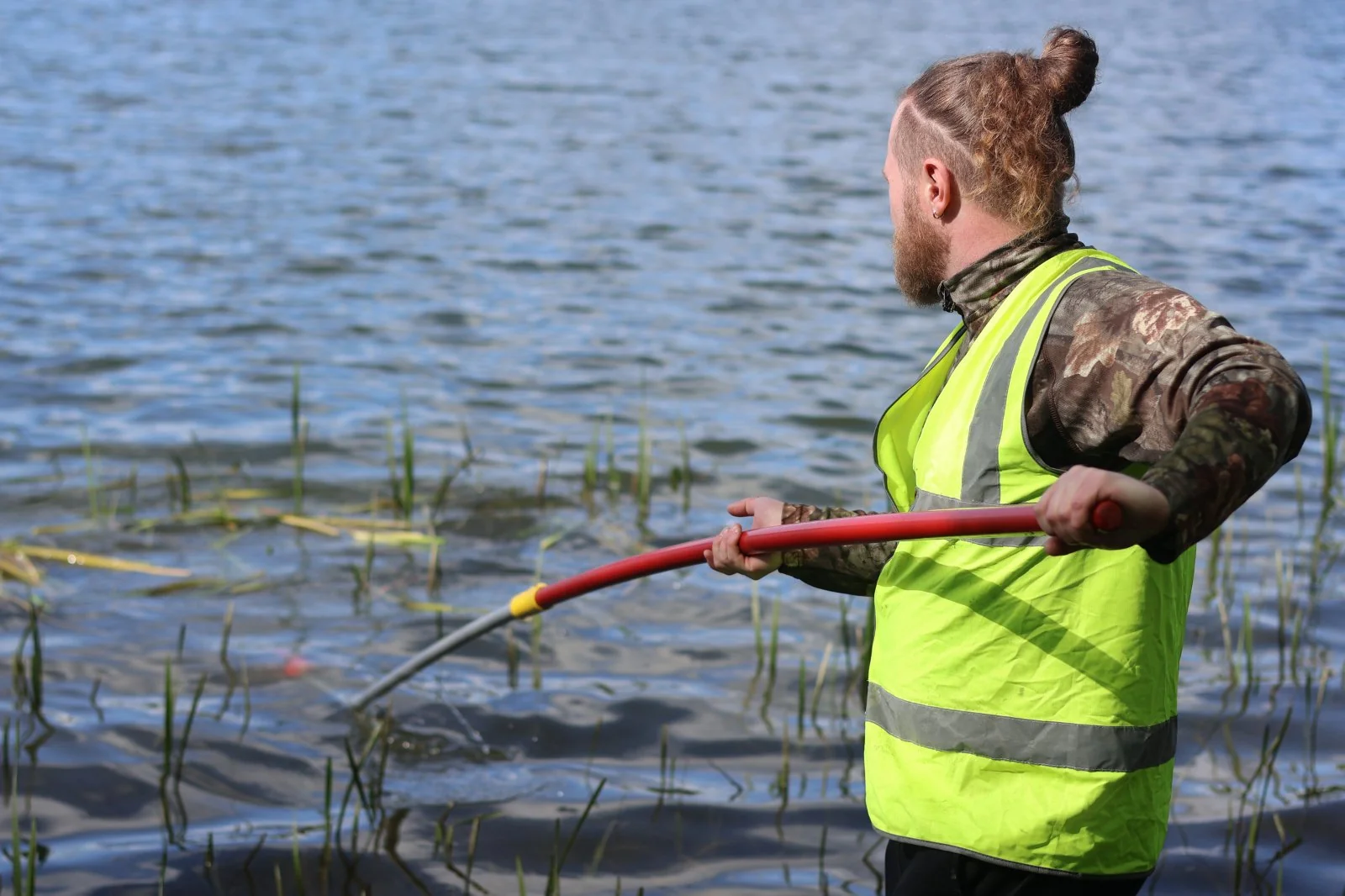
What it costs anglers to keep doing this
The cost is policy decisions made without us, every week, in rooms where the people deciding don't think we'd add anything if we were there. The funding asymmetry that allows this is genuine. Look at the numbers for the major UK conservation membership bodies and the body that represents our sport:
| Organisation | Annual income | Members |
|---|---|---|
| The Wildlife Trusts (federation) | £274m | 944,000 |
| RSPB | £169m | 1.1m |
| Angling Trust | ~£5m | 20,000 direct, ~300,000 via clubs |
| Wild Trout Trust | £1m | (small) |
Sources: published accounts 2023-24 and 2024-25. RSPB annual report; Royal Society of Wildlife Trusts; Angling Trust members' accounts; Wild Trout Trust Charity Commission filings.
Three million anglers, representative-body income in the low single-digit millions. That's a structural problem and it's not all of our own making. But it's not the only reason the rooms are empty of anglers. Trustees on Rivers Trust boards, Wildlife Trust regional councils, RSPB advisory groups, and EA fisheries forums are recruited through open calls. Most of those calls don't get angler applications. The Salmon and Trout Conservation, the Missing Salmon Alliance, the Rivers Trusts catchment partnerships, the academic advisory panels. These groups are populated by the people who put their names forward year after year. The pool of anglers doing that is much smaller than three million should produce.
So the rooms keep filling with people from other parts of the sector. They make assumptions about us based on what they see. The assumptions get baked into research framings, policy positions, licensing decisions. Cormorant licences. Stocking guidance. Water-quality enforcement priorities. Recreational sea fishing management. All decided in rooms where the dominant voice belongs to a sector ten to fifty times our funded size, working from a picture of anglers that we wrote ourselves, badly, in public.
That's the cost. Not the £5m income gap. The income gap is real but it's not what's killing us. What's killing us is that every decade we let the worst of us write our public profile, then wonder why no-one takes us seriously.
The funding gap is real. It's not the gap that's killing us. The gap that's killing us is the one we wrote ourselves.
How anglers stop digging the grave
The fix is in anglers' hands and most of it costs nothing. The institutions that have spent thirty years not building what the sector needed don't have to change for this to start working. We do.
The next time you see an evidence-free cormorant claim on Facebook, don't share it. If you want to share it, add the time, the location, the count method, and a photo of the birds. Can't add those? It isn't ready to share. Two years of anglers refusing to amplify unsourced shouting in our own spaces and the public picture starts shifting.
The next time someone from a trust or an authority publishes something you disagree with, write the counter-evidence. Or share their paper with the qualification you think is missing. Don't abuse them. Don't pile on. Don't share the screenshot to your local angling group with a sneering caption. They read angling press. They've got a long memory. They aren't your enemy and they haven't yet decided what they think of anglers. Most of them are quietly hoping anglers will turn up to the next round of evidence-gathering with something useful. Show them we will.
The next time you read someone in your own sub-discipline running down anglers from another sub-discipline, push back. Not with abuse, with facts. Match anglers aren't commercial cheats, carp anglers don't all leave litter, fly anglers aren't all elitists, sea anglers aren't separate from the sport. One community, three million members, a hundred specialisms. Every internal sneer makes the public picture worse for all of us.
The next time a consultation lands in your inbox, respond to it. Even a two-paragraph response from a club member, with your name, location, and a specific concern, counts more than nothing. Defra reads them. Sport England reads them. Natural England reads them. The volume of organised conservation responses dwarfs ours by ten to one or more on most consultations. Three million anglers responding three at a time changes the arithmetic.
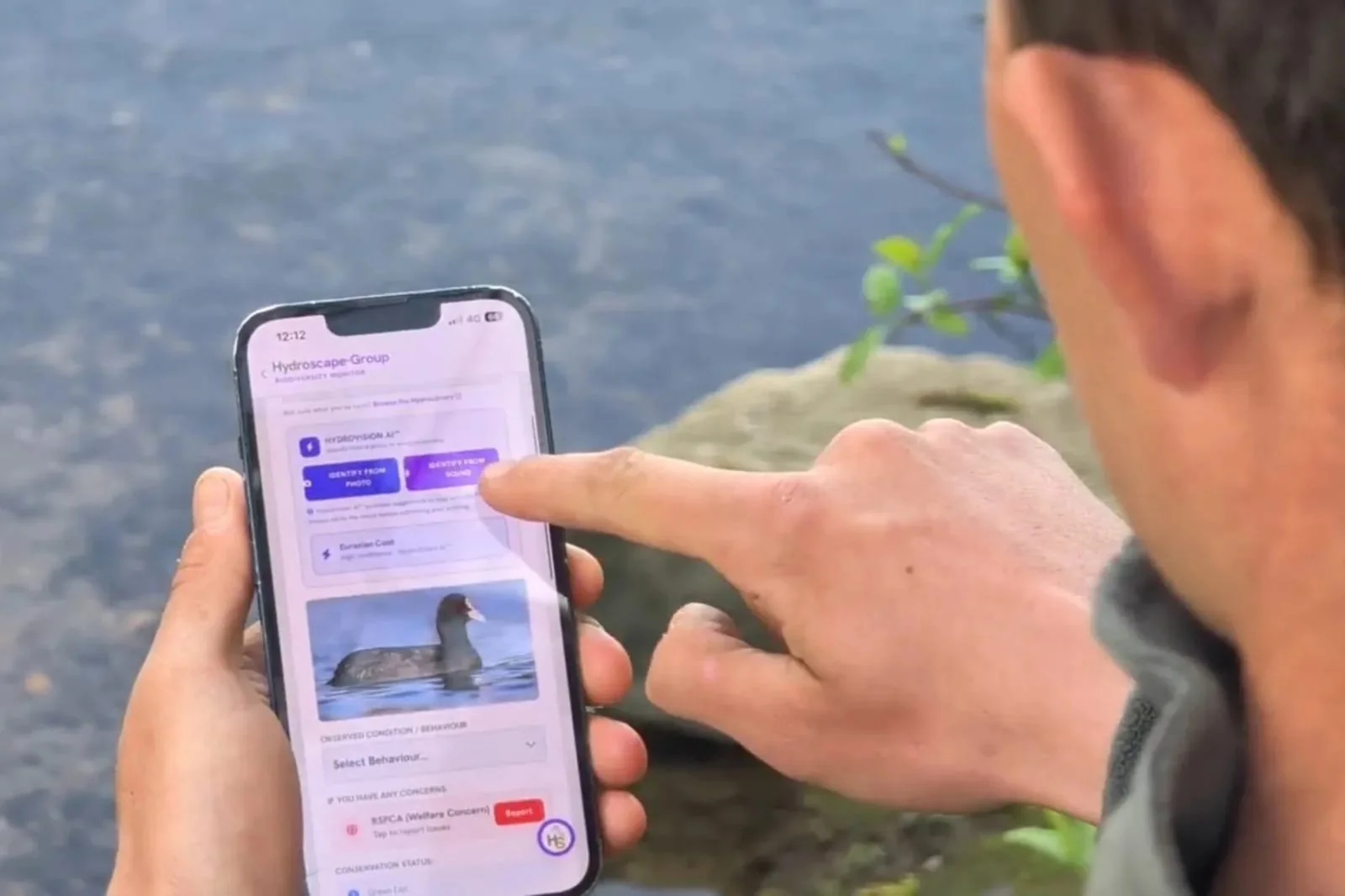
And the next time someone in your club or syndicate does the work, log it. The Riverfly survey, the bank clearance, the predation observation, the water-quality test, the cormorant count with a proper methodology. Get it into a system that can show it to people outside angling. Hydroscape exists for exactly that and isn't the only way. But the work has to leave evidence, and the evidence has to be visible to the rooms that don't currently know we do any of it. Most of what anglers contribute, nobody outside the sport ever sees.
And here's the one that matters most. The next time you see an angler doing any of this, sharing the unsourced cormorant photo, abusing the trust officer in the comments, sneering at another discipline, refusing the consultation, call them out on it. Not aggressively. Just directly. "Mate, that doesn't help us." If you think they'll listen, ask them to do the same to the next one. Behaving better yourself shifts the picture by one. Pulling one other angler up with you doubles it. If that angler pulls another up, you're at four. Five rounds of that and it's thirty-two. Ten and it's a thousand. Most anglers will never read this article. They don't need to. They need one angler in their club, their syndicate, their group chat, to look up from their phone and say it isn't on. That angler is you.
None of this requires the institutions to fix themselves first. It's all in the hands of individual anglers and individual clubs, and it can start tomorrow. A thousand anglers behaving online the way they'd behave at a club AGM, and within a year the script the rest of the sector reads about us starts to change.
The institutions can argue about who's in charge for another thirty years. While they do, three million anglers can change what the rest of the sector thinks of us, one Facebook comment at a time.
What this is really about
The seats at the table aren't being held back from anglers by a conspiracy of conservation NGOs. They're being filled by other people because we've written ourselves out of the conversation. Not by being absent. By being present in the worst possible way, in the spaces our critics screenshot every morning, while the work that would earn us back the room happens in silence on Riverfly forms, work-party rotas, and clubhouse minutes nobody outside the sport ever sees.
The music's been playing for thirty years. The seats have been filling up. The reason anglers don't have one isn't that the game was rigged. It's that we've spent the music telling the room we don't deserve a seat, while doing the work that should have earned us five. Stop telling them. Show them what we actually do. The next round starts now.
The Hydroscape Team
Anglers built this.
Hydroscape is what happens when fishery managers with decades of hands-on experience decide to build the evidence base themselves. Over 1,000 species in the HydroLibrary. Free to use. Visible to anyone who wants to see what anglers actually do.
Hydroscape is a freshwater biodiversity monitoring platform built by passionate fishery managers with decades of hands-on experience in water management, biodiversity, habitat improvement, and freshwater ecology. Financial figures cited in this piece are drawn from public accounts; sources are named in each section.
hydroscape-group.co.uk · info@hydroscape-group.co.uk